
The Cook County Department of Public Health has issued a public advisory regarding potential measles exposure linked to an unvaccinated child who visited Northwestern Medicine Palos Hospital while contagious on October 13.
The individual passed through the main hospital lobby and Suite 1010 (Surgical and Procedural Services) en route to outpatient testing from 4:30-7:15 p.m.
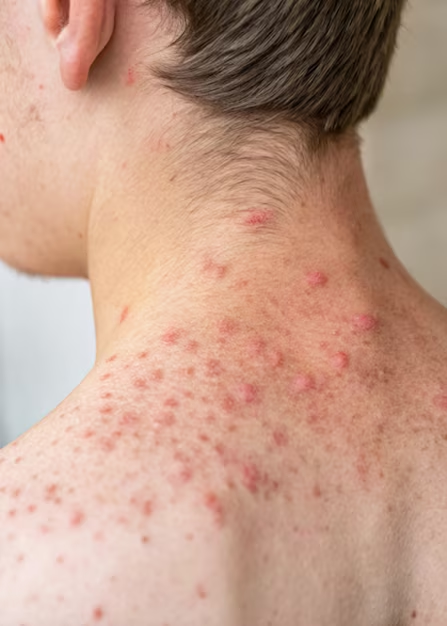
Symptoms typically appear within 21 days post-exposure and include:
- High fever
- Rash beginning on the face and spreading to the body
- Cough
- Runny nose
- Red, watery eyes
Infected individuals are contagious from four days before until four days after rash onset. Complications may include pneumonia, seizures, hearing loss, permanent brain damage, and death..
The measles virus can remain airborne for up to two hours after an infected individual leaves the area, posing a risk to others present during or shortly after the exposure period.
CCDPH is actively identifying and notifying individuals who may have been present in the hospital lobby, Suite 1010, or outpatient testing areas during the specified timeframe.
About measles exposure
- Measles is a highly contagious and potentially fatal disease. The virus can linger in the air for up to two hours after an infectious person departs. Even brief exposure of 15 minutes may result in transmission.
- The majority of individuals receive routine measles vaccination in childhood and are at low risk. The most effective prevention method is vaccination. Two doses of the MMR (measles, mumps, rubella) vaccine provide approximately 97% protection.
- Individuals should verify their vaccination status. Those unvaccinated or uncertain about their immunization history should consult their healthcare provider or schedule a vaccination appointment with Cook County Health by calling 312-864-1111.
Guidance for potentially exposed individuals
- Individuals who may have been exposed should confirm their vaccination status with a healthcare provider. Testing may be recommended if symptoms develop.
- Symptomatic individuals should contact their healthcare provider before visiting a medical facility to allow for appropriate infection control measures.
- Unvaccinated persons exposed to measles should discuss receiving the MMR vaccine with their healthcare provider. Vaccination after exposure is safe and may prevent disease onset.
- Routine childhood vaccination with two MMR doses—administered at 12-15 months and again at 4-6 years—generally confers lifelong immunity.
- Cooperation with public health officials is essential to contain the spread of measles. CCDPH assures that all personal information shared during contact tracing remains confidential and is not disclosed outside public health authorities.
Infected individuals are contagious from four days before until four days after rash onset. Complications may include pneumonia, seizures, hearing loss, permanent brain damage, and death.
Vaccination Resources
- Unvaccinated individuals without a healthcare provider are encouraged to contact Cook County Health at 312-864-1111 to arrange vaccination.
- The Chicago Department of Public Health (CDPH) offers free MMR vaccinations regardless of insurance status at multiple immunization clinics citywide. Walk-ins are accepted, though appointments are recommended via Getvaxchi.chicago.gov or by phone.
- Immunization records can be verified through the Illinois Department of Public Health’s Vax Verify portal.
- Individuals vaccinated before 1968 should consult their healthcare provider regarding revaccination or immunity testing.
- Those with only one MMR dose, compromised immune systems, or recent exposure to outbreaks should seek medical advice about additional vaccination.
- Vitamin A supplementation does not prevent measles infection and should not replace vaccination. It may reduce symptom severity in certain cases but is only effective as supportive care under medical supervision.
Individuals frequently interacting with international travelers—such as airport personnel and rideshare drivers—should ensure their vaccinations are current due to increased exposure risk.