
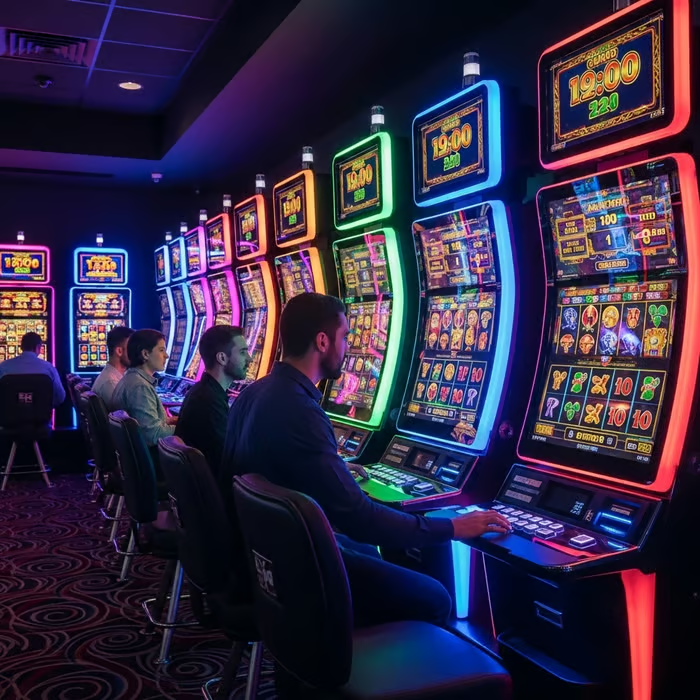
Chicago Mayor Brandon Johnson is deadset against allowing video gaming in the city.
He says a consulting study commissioned by the city figured video gambling revenue would amount to $10 million per year and might cut into tax revenues produced by the Bally’s casino.
This newspaper took a look at gambling revenues in five southwest suburbs – Bedford Park, Bridgeview, Burbank, Cicero and Stickney – and, based on their results, extrapolated that Chicago could see as much as $68 million in tax revenue from gaming machines. It was unscientific but the math seemed to add up.
“We can’t leave millions of dollars on the table. And so, whatever comes from City Council — if it doesn’t maximize the full benefit of what this opportunity could bring to the revenue structure of our city, then I’m not going to be supportive of it,” Johnson told reporters at one of his weekly City Hall news conferences.
Ald. Anthony Beale (9th), one of the mayor’s most outspoken critics, pushed an ordinance allowing gaming machines through the License Committee by a 8-6 vote. The measure would still need approval by the full city council.
Southwest Side Ald. Silvana Tabares (23rd) sees the benefit. “While not without its faults, video gaming is an option that should be implemented before raising taxes on working families,” she posted Friday on her Facebook page “Businesses in wards like ours should also be able to compete with suburban establishments that offer gaming.”
Beale’s ordinance would allow video gaming terminals in about 3,500 establishments where liquor can be sold but isn’t the primary business. That means restaurants, hotels, arcades and bowling alleys but no bars. Each would be allowed the state maximum of six machines.
I have dropped a double sawbuck or two in gaming machines in the suburbs, usually at a restaurant. If I break even, I’m happy. Hell, I’m not sad even if I lose. It’s not a lot of money in the grand scope of things.
The debate got me thinking. What if the video gaming machines were confined to O’Hare Airport, Midway Airport and Navy Pier?
Navy Pier is mostly for tourists. There are plenty of restaurants on the Pier that could host the machines and would gladly pad their own profits as well as throw tax money to the state and city. It would let those folks from Iowa checking out Harry Carey’s Tavern or the Billy Goat help the city’s bottom line.
As lucrative as Navy Pier might be, the airports should be even more profitable.
There are 74 restaurants at O’Hare Airport. In the first seven months of this year, 48 million people have been through the airport.
Midway averages more than 1 million passengers per month and has more than a dozen restaurants.
Federal guidelines require passengers to be at the airport hours before their flight for security screenings. Once there, what’s to do? Not much.
Imagine you’re at the airport waiting for your flight that won’t take off for two hours. You’re basically trapped. Now, imagine there are six video gaming machines sitting in the restaurant next to your waiting area. You could win enough to pay for the tickets you’re about to use.
If only 10 million travelers take advantage of the gaming opportunities, and the city gains $10 in tax revenue from each visitor, the city should reap more than $100 million. And don’t forget about the licensing fees for the machines.
For a city that’s always looking for more revenue, it seems shortsighted to ignore the possible millions of dollars video gambling might bring in – mostly from out-of-towners.
And why stop there? Let other businesses share the wealth as well as contribute to the city’s coffers. More than one suburban business owner has told me the money the machines provide is the difference between closing and staying in business. That’s probably true for city business owners, too.
Bob Bong is editor of Southwest Regional Publishing